
Skip to content
Pacific Eye Associates

Uveitis

Uveitis is inflammation of the uvea, the middle layer of the eye. The uvea sits between the white outer layer (sclera) and the light-sensitive inner layer (retina), and it provides much of the eye’s blood supply. When it becomes inflamed, it can affect nearby structures and, if left untreated, may cause lasting damage, including vision loss. At Pacific Eye Associates, uveitis care is provided by a fellowship-trained ophthalmologist who specializes in ocular inflammatory disease.

In this Page

What Causes Uveitis?

Uveitis can be triggered by conditions inside or outside the eye, including:

  • Autoimmune or inflammatory conditions, such as rheumatoid arthritis, sarcoidosis, or inflammatory bowel disease
  • Infections, including viral, bacterial, fungal, or parasitic
  • Eye injury
  • Unknown causes. Often no specific cause is found, and treatment is guided by your symptoms and exam instead.

Because uveitis can be linked to conditions elsewhere in the body, your care may involve a rheumatologist or other specialist.

Types of Uveitis

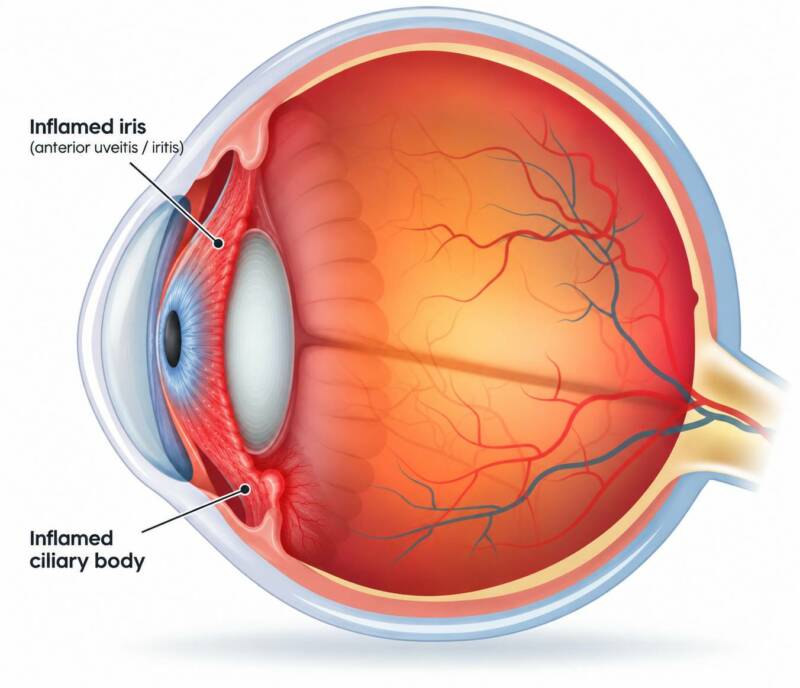
Anterior Uveitis (Iritis)

Iritis affects the iris and ciliary body at the front of the eye. It's often linked to autoimmune conditions and usually treated with eye drops.
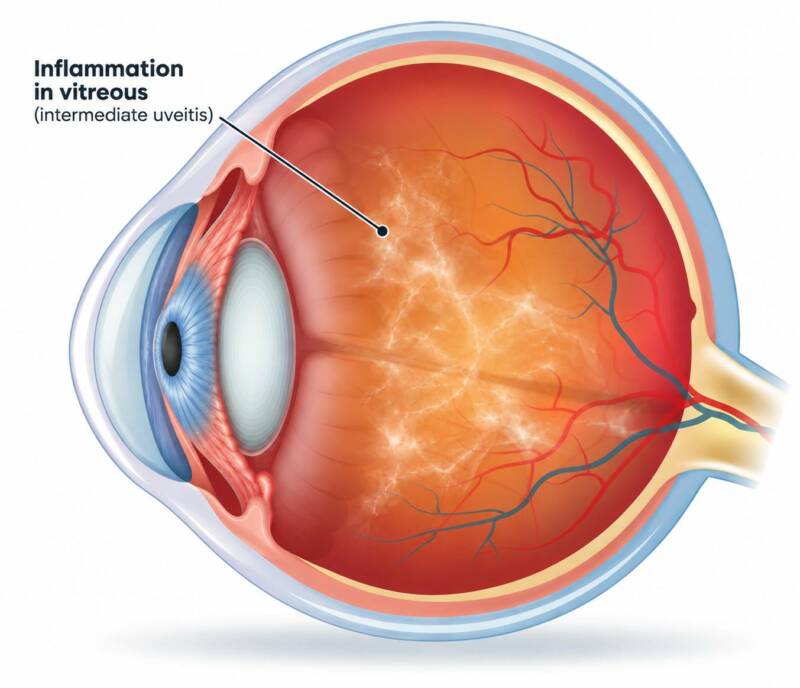
Intermediate Uveitis

Intermediate Uveitis

Intermediate Uveitis affects the vitreous and the far edges of the retina. It's more can last months to years, with periods of flare-ups.
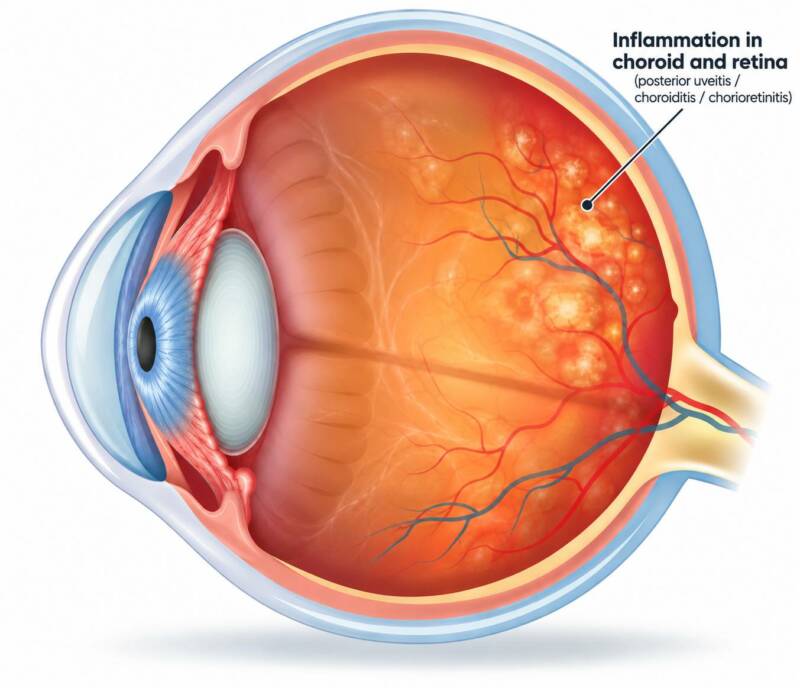
Posterior Uveitis (Choroiditis / Chorioretinitis)

Posterior Uveitis
(Choroiditis / Chorioretinitis)

Posterior Uveitis affects the choroid and retina at the back of the eye. It tends to develop gradually and carries the highest risk to vision.

Meet Our Specialist

When to Seek Care

New or worsening redness, pain, light sensitivity, or vision changes should be checked promptly.
If you have been diagnosed with uveitis and are experiencing a flare, call us at (415) 923-3007 rather than waiting for a routine appointment.

Uveitis Treatment

Treatment depends on the type, cause, and severity of your uveitis. Options may include:

  • Steroid eye drops, often used for anterior uveitis
  • Oral or injected steroids for more severe or posterior uveitis
  • Immunosuppressive medications for chronic or recurring uveitis
  • Antimicrobial medication when an infection is the cause

Your doctor may also recommend lab tests or imaging to help pinpoint the cause.