
415-923-3007
2100 Webster St #214, San Francisco, CA 94115
Book Online

Glaucoma

Glaucoma is a group of eye diseases that damage the optic nerve, which carries images from your eye to your brain. It is often linked to high pressure inside the eye, but it can also happen at normal eye pressure. Vision lost to glaucoma can’t be restored. Treatment can slow or stop further damage.

Glaucoma care starts with an exam

Early detection is the best way to protect your vision from glaucoma.

In this Page

Why Regular Eye Exams Matter

Most glaucoma has no early warning signs. There’s no pain, and vision loss usually starts at the edges of your sight, so many people don’t notice until the damage is significant. A routine eye exam can find signs of glaucoma long before you would notice a change.

Types of Glaucoma

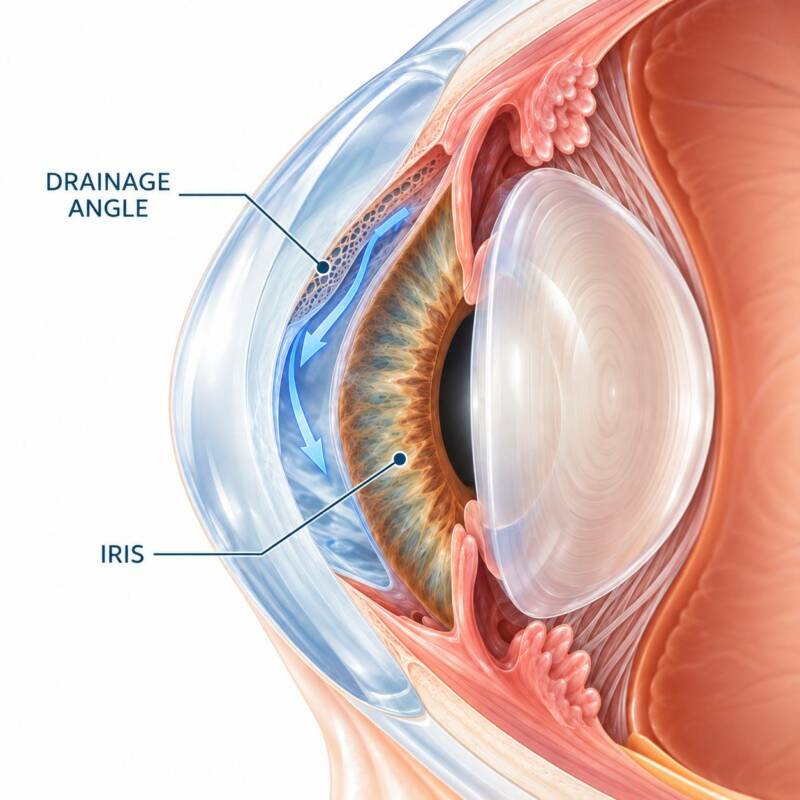
Your eye constantly makes a clear fluid that drains out through a channel called the drainage angle, where the iris meets the cornea. In the two most common types of glaucoma, that drainage doesn’t work as it should.

Open-Angle Glaucoma

Open-Angle Glaucoma

Open-angle glaucoma is the most common type. The drainage angle stays open, but fluid drains too slowly, like a partly clogged drain. Pressure rises gradually and damages the optic nerve. Side vision is usually affected first, and central vision may not change for years.
Closed-Angle Glaucoma

Angle-Closure Glaucoma

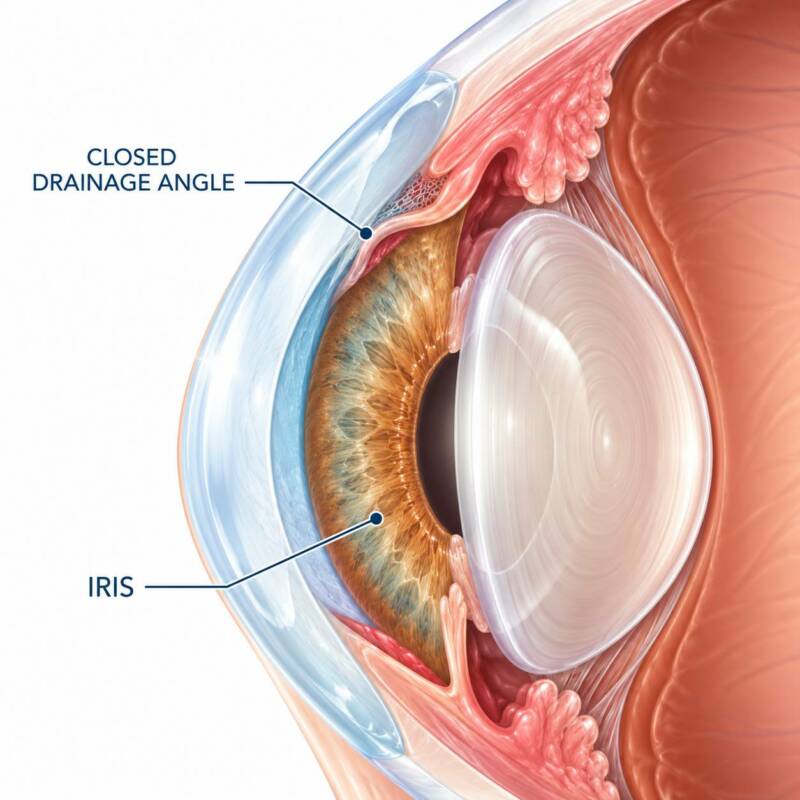
Angle-closure glaucoma happens when the iris sits too close to the drainage angle and blocks fluid from leaving, like a sheet of paper over a sink drain. It can develop slowly with no symptoms, or suddenly as an acute attack. A narrow drainage angle can often be found during a routine eye exam.


How Glaucoma Is Diagnosed

During a glaucoma evaluation, your eye doctor measures your eye pressure and examines your optic nerve. Imaging helps catch changes early and track them over time:

  • Visual field testing maps your side vision to find blind spots you may not notice yet.
  • Optical coherence tomography (OCT) scans the layers of the optic nerve and retina to detect thinning.
  • Optic nerve photography takes detailed images of the back of the eye to compare at future visits.

Treatment

Glaucoma treatment lowers eye pressure to protect the optic nerve. Your doctor will recommend an approach based on your type of glaucoma, how far it has progressed, and your health history.

  • Prescription eye drops are often the first step. Most are used once or twice a day.
  • Durysta® is a tiny implant placed inside the eye that slowly releases medication. It may reduce or replace daily drops for some patients with open-angle glaucoma. [Learn more about Durysta]
  • Laser treatment is done in our office. Selective laser trabeculoplasty (SLT) helps fluid drain in open-angle glaucoma. Laser peripheral iridotomy (LPI) makes a small opening in the iris to treat or prevent angle-closure glaucoma.
  • Minimally invasive glaucoma surgery (MIGS) is an outpatient procedure that improves the eye’s drainage through very small incisions.

Have questions or ready to schedule?

Our glaucoma specialists see new patients and provide ongoing care.

Meet Our Glaucoma Specialists

Our glaucoma specialists completed fellowship training in glaucoma after their ophthalmology residency. They diagnose and treat glaucoma at every stage, from early signs to in-office laser treatment and surgery, and follow patients over the long term.

Our Approach to Glaucoma Management

Glaucoma usually needs ongoing monitoring, not a single treatment. At each visit, your specialist compares new test results with earlier ones and adjusts treatment if anything has changed. Plans are based on each patient’s test results, risk factors, and daily routine, whether that means one eye drop a day, laser treatment, or surgery.

Glaucoma can run in families, and regular dilated eye exams are recommended even without symptoms.

415-923-3007

2100 Webster St, San Francisco, CA 94115